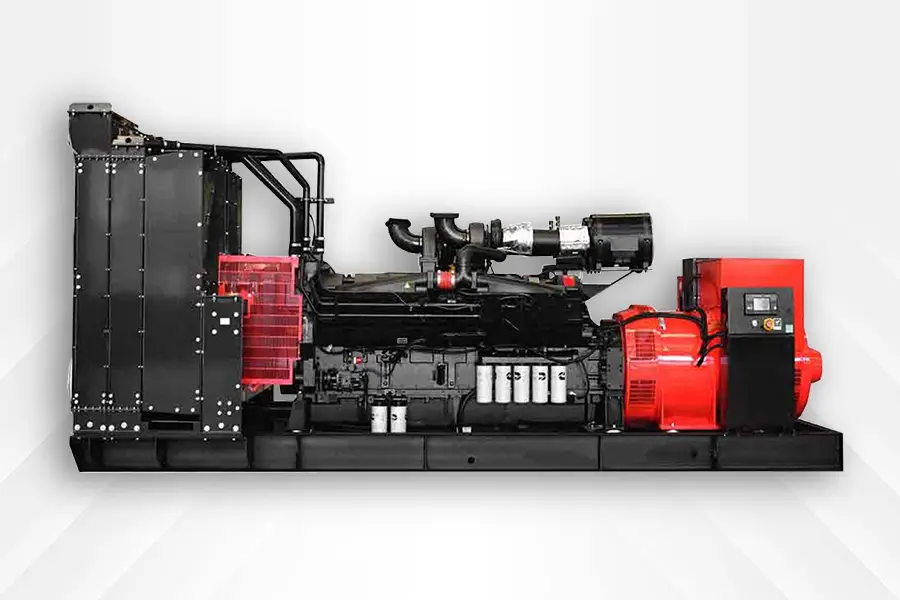
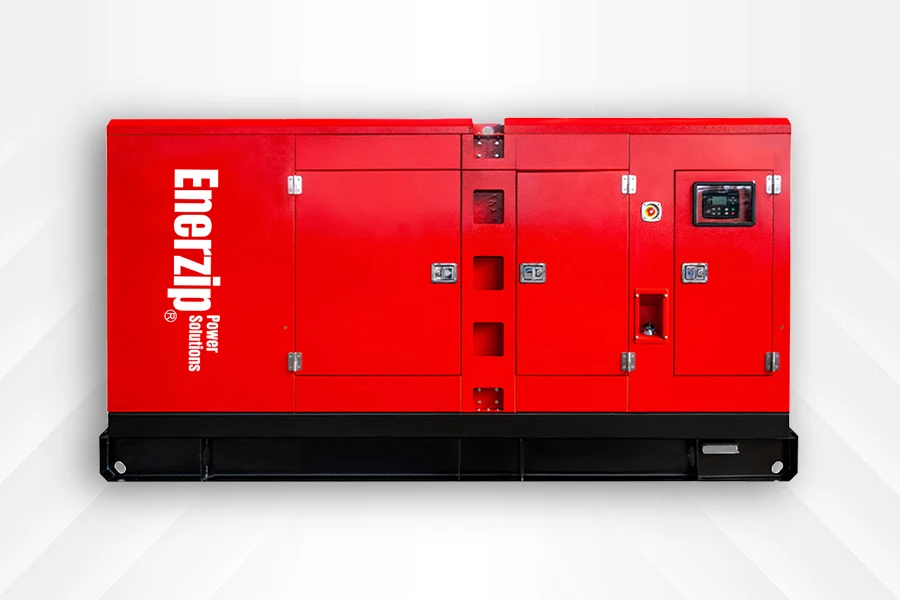
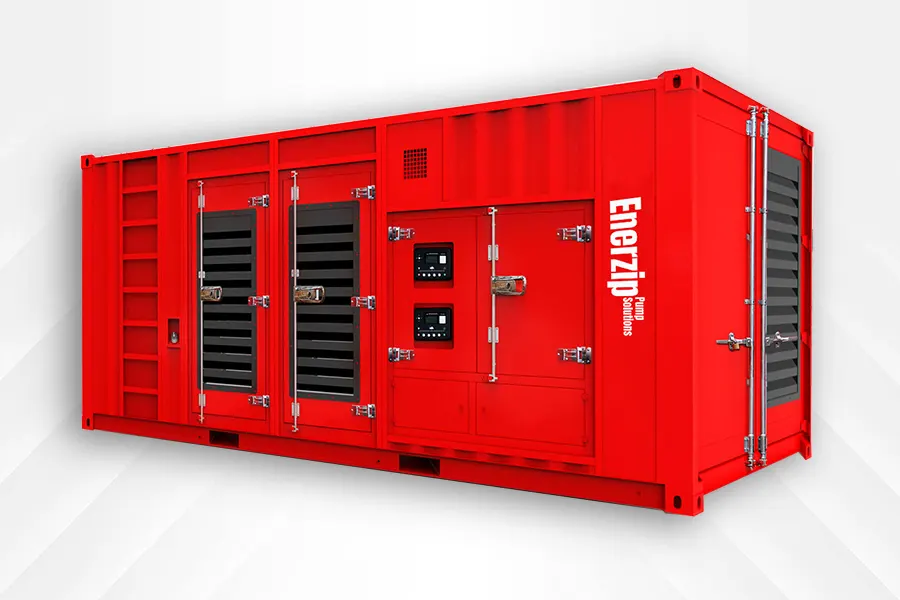
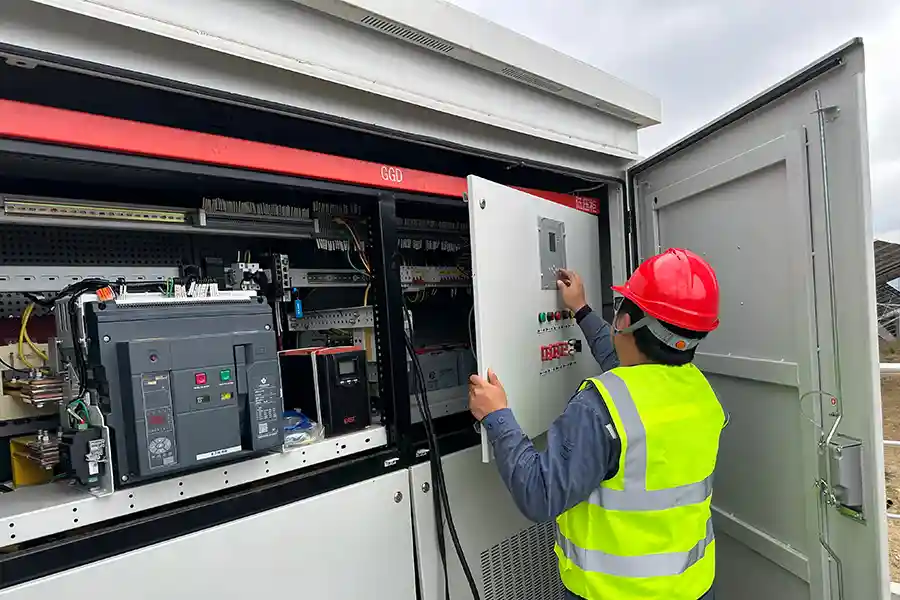
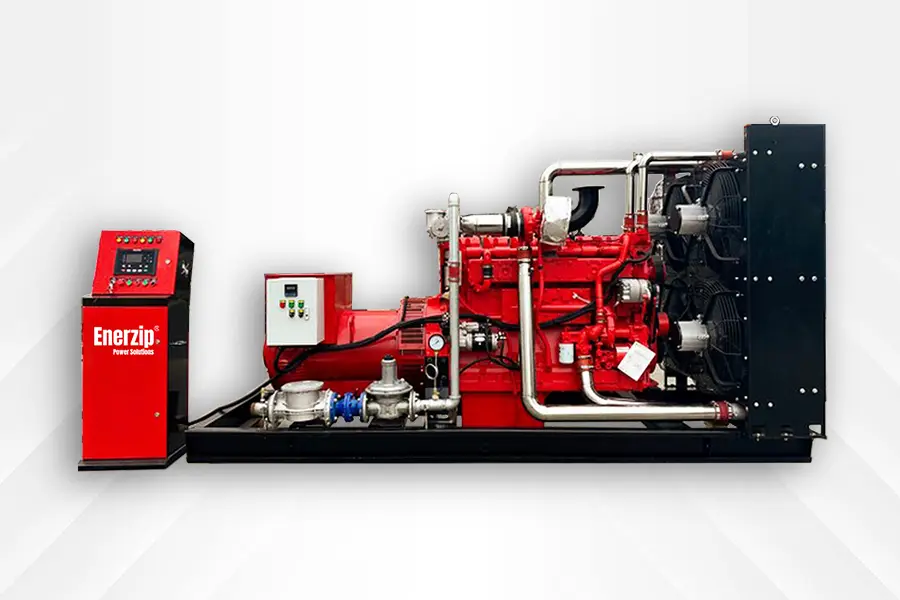
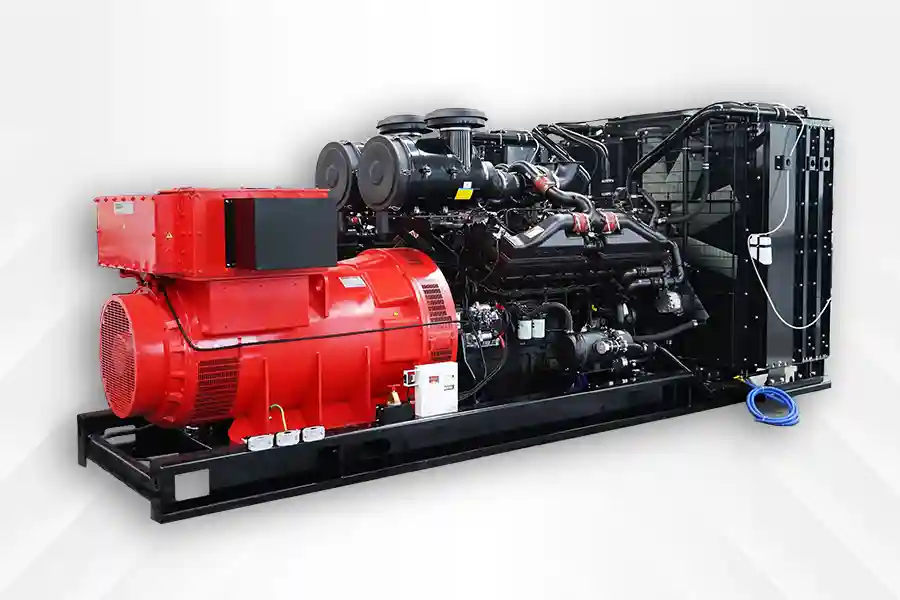
Natural gas generator sets can supply industrial and commercial loads where a suitable gas supply is available. Applications may include factory power generation, site power and standby supply. The operating duty must be specified before selecting the engine and generator rating.
For standby applications, confirm that the gas supply will remain available during a utility power outage. Electrically operated gas supply equipment, where required, must also be considered in the starting and backup-power arrangement.
ENERZIP C Series — Powered by Cummins
50 Hz / 1,500 rpm / Power Factor: 0.8 / 400 V / 3-Phase, 4-Wire
| Genset Model |
ESP (kVA) |
ESP (kW) |
PRP (kVA) |
PRP (kW) |
Gas Consumption (Nm³/h, 100% / 75% Load) |
Open-Type Dimensions L × W × H (mm) |
Silent-Type Dimensions L × W × H (mm) / Container |
Engine Model |
Country of Origin |
Cylinder Arrangement |
Displacement (L) |
Governor |
Cooling |
| C40N5 |
41 |
33 |
37.5 |
30 |
11.5 / 8.8 |
1800 × 870 × 1450 |
2200 × 940 × 1460 |
B3.9G-G45 |
China |
4L |
3.9 |
E |
Water Cooling |
| C60N5 |
69 |
55 |
62.5 |
50 |
18.5 / 14.2 |
2200 × 870 × 1580 |
2400 × 1000 × 1560 |
B5.9G-G100 |
China |
6L |
5.9 |
E |
Water Cooling |
| C100N5 |
110 |
88 |
100 |
80 |
21.0 / 16.5 |
2300 × 870 × 1580 |
3000 × 1240 × 1760 |
B5.9G-G100 |
China |
6L |
5.9 |
E |
Water Cooling |
| C110N5 |
124 |
99 |
112.5 |
90 |
29.5 / 28.8 |
2350 × 1000 × 1580 |
3300 × 1400 × 1950 |
C8.3G-G145 |
China |
6L |
8.3 |
E |
Water Cooling |
| C125N5 |
138 |
110 |
125 |
100 |
29.5 / 28.8 |
2350 × 1000 × 1580 |
3300 × 1400 × 1950 |
C8.3G-G145 |
China |
6L |
8.3 |
E |
Water Cooling |
| C150N5 |
165 |
132 |
150 |
120 |
29.5 / 28.8 |
2400 × 1000 × 1580 |
3300 × 1400 × 1950 |
C8.3G-G145 |
China |
6L |
8.3 |
E |
Water Cooling |
| C175N5 |
193 |
154 |
175 |
140 |
41.5 / 31.8 |
2500 × 1010 × 1580 |
3300 × 1400 × 1950 |
L8.9G-G176 |
China |
6L |
8.9 |
E |
Water Cooling |
| C200N5 |
220 |
176 |
200 |
160 |
41.5 / 31.8 |
2500 × 1010 × 1580 |
3300 × 1400 × 1950 |
L8.9G-G176 |
China |
6L |
8.9 |
E |
Water Cooling |
| C250N5 |
275 |
220 |
250 |
200 |
52.0 / 40.5 |
3200 × 1200 × 1800 |
4000 × 1800 × 2150 |
NT855G-G220 |
China |
6L |
14 |
E |
Water Cooling |
| C310N5 |
344 |
275 |
312.5 |
250 |
66.5 / 51.2 |
3900 × 1700 × 1850 |
4300 × 2100 × 2300 |
K19G-G290 |
China |
6L |
18.9 |
E |
Water Cooling |
| C375N5 |
413 |
330 |
375 |
300 |
74.5 / 56.2 |
3900 × 1700 × 1850 |
4400 × 2100 × 2450 |
K19G-G330 |
China |
6L |
18.9 |
E |
Water Cooling |
| C500N5 |
550 |
440 |
500 |
400 |
125.0 / 95.8 |
4100 × 2100 × 2100 |
4200 × 2300 × 2300 |
K38G-G550 |
China |
12V |
37.8 |
E |
Water Cooling |
| C625N5 |
688 |
550 |
625 |
500 |
125.0 / 95.8 |
4200 × 2300 × 2100 |
4300 × 2300 × 2300 |
K38G-G550 |
China |
12V |
37.8 |
E |
Water Cooling |
| C625N5A |
688 |
550 |
625 |
500 |
170 / 130 |
4200 × 2300 × 2100 |
4300 × 2400 × 2300 |
K38N-G5 |
China |
12V |
38 |
ECM |
Water Cooling |
| C750N5 |
825 |
660 |
750 |
600 |
175 / 135 |
4315 × 2020 × 2235 |
4515 × 2420 × 2435 |
K38N-G6 |
China |
12V |
38 |
ECM |
Water Cooling |
| C875N5 |
963 |
770 |
875 |
700 |
215 / 163 |
4315 × 2020 × 2235 |
4515 × 2020 × 2535 |
K38N-G7 |
China |
12V |
38 |
ECM |
Water Cooling |
| C1000N5 |
1100 |
880 |
1000 |
800 |
220 / 170 |
4280 × 1960 × 2310 |
4580 × 1960 × 2510 |
K38N-G8 |
China |
12V |
38 |
ECM |
Water Cooling |
| C1125N5 |
1238 |
990 |
1125 |
900 |
250 / 195 |
4200 × 2060 × 2165 |
ISO 20 ft Container |
K50N-G1 |
China |
16V |
50.3 |
ECM |
Water Cooling |
| C1250N5 |
1375 |
1100 |
1250 |
1000 |
275 / 215 |
4200 × 2060 × 2165 |
ISO 40 ft Container |
K50N-G8 |
China |
16V |
50.3 |
ECM |
Water Cooling |
| C1375N5 |
1513 |
1210 |
1375 |
1100 |
300 / 235 |
4950 × 2000 × 2580 |
ISO 40 ft Container |
K50N-G9 |
China |
16V |
50.3 |
ECM |
Water Cooling |
| C1500N5 |
1650 |
1320 |
1500 |
1200 |
305 / 240 |
5420 × 2140 × 2500 |
ISO 40 ft Container |
K50N-G10 |
China |
16V |
50.3 |
ECM |
Water Cooling |
Table notes: PRP = prime power; ESP = emergency standby power; E = electronic governing; ECM = electronic control module. 4L and 6L indicate inline engines; 12V and 16V indicate V-arrangement engines.
The table reproduces the supplied catalogue configurations. Final engine model, rating applicability and dimensions require confirmation in the project datasheet. Some kVA values are rounded. Gas consumption is listed at 100% and 75% load, but the reference heating value, normal-volume conditions and whether the load percentage refers to PRP must be confirmed. These figures should not be treated as guaranteed site consumption or used alone to size the gas supply.
Generator Configuration and Operating Duty
Open-type units require a suitable equipment room or shelter with adequate ventilation, cooling-air discharge and maintenance access. Enclosed units provide an alternative installation arrangement, while the larger configurations listed above use container housings. Noise performance, weather protection and the final equipment footprint must be specified for the selected arrangement.
Prime and standby ratings are subject to the selected engine manufacturer’s operating limits. A catalogue PRP value should not automatically be treated as a continuous base-load rating. Projects requiring sustained output should state the expected daily operating hours, annual hours and load profile so that the applicable rating can be confirmed.
Fuel Gas Quality and Supply Requirements
Before engine selection, provide a gas analysis and the available supply conditions at the proposed generator connection. Required information includes gas composition, lower heating value, minimum and maximum pressure, gas temperature and available flow. Pressure should be stated under operating flow conditions, rather than only as a static reading.
The selected engine’s fuel specification determines acceptable gas quality. Moisture, particles, sulphur compounds and other contaminants must remain within the applicable limits. Changes in gas composition or insufficient supply pressure can affect available output and engine operation.
Pipeline natural gas and gas supplied through CNG pressure reduction or LNG regasification can be considered after reviewing the resulting fuel conditions. The generator requires gas at its specified inlet conditions; high-pressure storage or liquid fuel cannot be connected directly to the engine gas inlet.
Electrical Output and Gas Consumption
The listed electrical configuration is 400 V, 50 Hz, three-phase, four-wire at a power factor of 0.8. Selection must also consider motor starting, load steps and equipment such as UPS systems and variable-frequency drives. Provide the largest expected load step and acceptable voltage and frequency variation for assessment.
Available output depends on fuel properties, altitude, ambient temperature and the complete cooling arrangement. The quotation should identify the site rating and any applicable derating. Where auxiliary equipment consumes power, gross generator output and net power available to the site should be distinguished.
Gas consumption comparisons require the same load basis, heating value and volume reference conditions. Operating-cost calculations should use the confirmed consumption at the expected load profile, together with the local gas tariff and maintenance requirements.
Controls and Parallel Operation
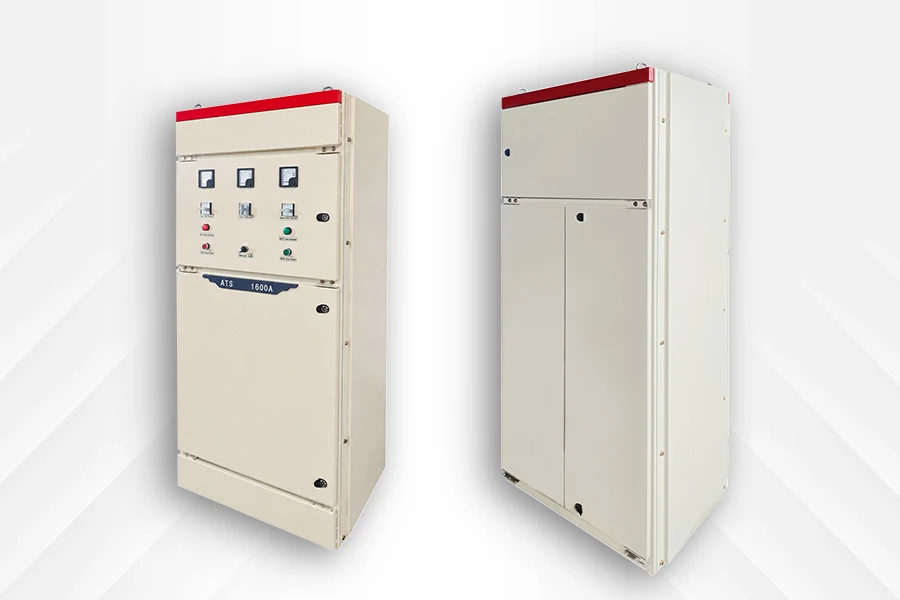
The engine configurations use electronic governing or ECM control as listed. Generator controller selection depends on whether the unit will operate manually, start automatically on demand or form part of a multiple-generator system.
Optional paralleling equipment can be specified for compatible generator sets. The scope should define synchronization, active and reactive load sharing, breaker control and protection. Utility-parallel operation requires a separate assessment of the connection arrangement and the local utility’s requirements.
Installation and Gas System Interfaces
The installation design must address the foundation, service access, ventilation, exhaust routing, electrical connections, earthing and gas supply. Gas pipe sizing should account for maximum demand and pressure losses between the supply point and the generator.
The quotation must identify responsibility for pressure regulation, filtration, the engine gas train, isolation valves, gas detection and site pipework. Gas boosting or conditioning equipment, where required, should be defined separately. Installation and commissioning responsibilities should be agreed before delivery.
Heat recovery may be assessed where the site has a suitable thermal demand. Recovered heat output, water temperatures, heat exchangers and system interfaces require a project-specific design and are not included in the electrical ratings shown above.
Frequently Asked Questions
Can these generators use pipeline natural gas?
Pipeline natural gas can be considered if its composition, heating value, pressure and available flow meet the selected engine’s requirements. Send the supplier’s gas analysis and pressure data for assessment.
Can the generator operate on CNG or LNG?
CNG requires suitable pressure reduction, while LNG requires regasification. In both cases, the resulting gas must meet the engine’s inlet pressure, temperature and fuel-quality requirements. Storage, pressure reduction and regasification equipment must be specified separately.
What gas pressure is required?
The required pressure range depends on the engine and gas train. There is no single inlet pressure that applies to every model in this table. The project datasheet should state the required pressure at the generator connection under operating conditions.
How much gas will the generator consume per hour?
Reference values are shown in the table. Actual consumption depends on load, gas heating value and operating conditions. For a project estimate, provide your gas analysis and expected load profile so that the consumption basis can be confirmed.
Can the generator run for long periods?
Extended operation requires an appropriate engine rating, stable fuel supply, adequate cooling and scheduled maintenance. Provide daily operating hours and the expected load. Continuous base-load operation must be assessed separately from prime or emergency standby duty.
Are gas treatment equipment and connection pipes included?
They are included only when listed in the quotation. The supply scope should distinguish the generator’s gas train from upstream regulation, filtration, gas boosting, site pipework and other installation equipment.